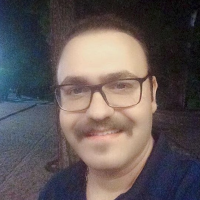
Masoud Shaterpour Khiaban
A spotless mind that burned in the fire.
Memories of Masoud, of Mahan, still remain. Some memories live longer than the people themselves.
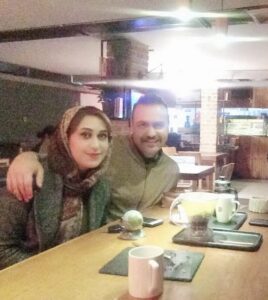
I can still see the last time: a few hours before the flight, sitting in a café, surrounded by friends’ laughter and the smell of coffee.
Masoud was quietly drinking coffee and, as always, making everyone laugh. He laughed as if the world had never been able to wound him.
But the world had wounded him.
Far more deeply than anyone understood.
He said it himself in that video:
“I carried the suffering of the world and loneliness on my shoulders… and now I’m putting it on yours.”
Even so, if someone met him for the first time, they would have thought he was the happiest person in the world.
He hid his sadness somewhere behind his jokes and his loud laughter.
As if it was his duty to lift everyone’s spirits, even while his own spirit was slowly falling apart.
In his final video, he said:
“Leaving is up to me. Returning is up to God. I’m gone… and I’m not coming back.”
Now those words keep echoing in my mind,
like a voice that finds its way into you and never leaves.
Now everything in the house smells like him.
His books are still where he left them:
his university books, novels, notebooks, and notes filled with his own handwriting.
Some pages are still folded. Some sentences are underlined, as if he had planned to come back and finish them.
His clothes are still hanging in the closet.
His guitar is still in the corner of the room.
His cologne isn’t finished.
His spray bottle is still sitting on the table.
His shoes are still by the door.
Sometimes all this “remaining” makes a person angry.
Everything is still here, except the person himself.
His notebook is still beside his desk, the place where he sat and wrote at night:
“When you have a wish in your heart, it means you’re meant to reach it.”
Masoud was always afraid of happiness.
He used to say that until his feet touched Canadian soil, he wouldn’t believe that happiness had finally come for him.
He said whenever life started going well, he became more afraid, because in the end everything always fell apart.
That night his friends told him:
“This time is different. You have your visa. Your flight is in a few hours. A new life is beginning. And your love is waiting for you.”
But somehow, for him, leaving itself had always carried an old wound,
a wound he never fully talked about.
Masoud was born on October 27, 1988, in Tehran, into a family of seven.
He grew up with two sisters and two brothers.
Later, the family moved to Rasht, where much of his life was spent.
Throughout school, he was an outstanding student.
He was ambitious.
He had a remarkable passion for life, for the future, for creating something.
But sorrow entered their home very early.
During his high school years, he lost his mother.
And from that age, something inside him slowly grew old.
After his mother’s death, he buried himself in studying and hard work more than ever,
as if he wanted to keep alive the dreams she had for him at any cost.
He studied Laboratory Sciences at Shahid Beheshti University.
During those years, he built a “smart otoscope” device.
Later, he tried to enter medical school and passed an examination, but his place was taken and given to someone else.
Most people might have broken at that point.
Masoud started over.
He prepared for graduate school, worked again, and kept moving forward.
Sometimes he got tired.
Sometimes grief slowed him down.
But he never gave up.
It was during those years that we fell in love.
We spent three years together:
studying, laughing, crying, dreaming, leaning on one another.
We went to the library together in the mornings, got exhausted, and stood back up again.
We were together through every difficult and beautiful day.
What does a person want from life besides love?
Besides someone they can imagine a future with?
Besides someone they know will never let go of their hand during hard times?
Masoud’s mind was always focused on building:
a peaceful home, a happy family, continuing his education, and a future he believed he could build with his own hands.
He proposed to me.
We made promises to build a future together.
We had plans for a home that didn’t yet exist.
Plans for years we believed we would have time to live.
The day I finally said yes to him, despite all my fears and doubts, I asked him to speak with his father so our families could formally talk.
His father was outside Tehran that day.
He called him.
A few hours later, his father came to Tehran.
That night we went out, walked together, talked, and spoke about a future that was finally becoming real.
About the life we were slowly going to build.
His father had just arrived home and gone to rest.
And that same night, everything collapsed.
His father had a stroke and died.
After that, grief settled deep inside Masoud,
a heavy grief that never completely left his eyes.
But still, he kept going.
With that same smile that seemed created to hide all the sadness in the world.
He had decided that after finishing his second master’s degree, he would study dentistry in Canada.
He talked excitedly about the future.
About the clinic he wanted to build.
About the peaceful life he believed we finally deserved.
More than anything, he wanted to become a father.
Sometimes he spoke excitedly about our future children,
as if he wanted to rebuild the family he had lost.
He used to say:
“If I have to, I’ll start over from the beginning. I don’t care how many years it takes.”
When his acceptance letter from York University arrived, he cried.
He bowed in gratitude.
We spent hours looking at streets around the university on Google Maps.
Searching for temporary housing.
Looking at homes in Toronto and imagining our lives there in every detail:
which neighborhood was quieter, which house had better sunlight, which room our child might love the most.
We were already living our future,
without knowing death had reached it before we did.
No one imagined that missiles fired from the ground would extinguish 176 lives;
not even the life of the unborn child still breathing inside its mother’s womb.
Masoud was sitting in his airplane seat, with a heart full of hope, love, and dreams.
His last calls with me were full of worry.
That night he was afraid of war.
He was worried about my future.
He kept telling me to finish my own plans quickly and come to him.
He was even afraid of distance,
afraid that being apart would damage our relationship.
Neither of us knew that minutes later, missiles launched by the Islamic Republic would take that entire life away from us.
And a few minutes later, the sky over Tehran burned.
Identifying his body took time.
Because his parents were no longer alive, the process was more difficult.
He was one of the last victims identified.
He was buried beside his mother and father in Rasht.
On the day of the funeral, I still couldn’t believe Masoud was dead.
My mind kept denying it.
I kept looking for him.
I thought maybe there had been a mistake.
Maybe he was still alive.
One of his friends said that if I didn’t see his body, I would remain in denial forever.
And I saw him.
A body torn apart.
A body without a head.
I saw the love of my life inside a plastic bag filled with blood and chemicals,
after pieces of his body had been kept in a morgue for two weeks.
I held his hands.
I touched his chest.
I touched his stomach.
He was cold.
Cold, cold, cold.
After that, I don’t remember anything else.
I fainted.
When I opened my eyes, his brother had pulled me away, and Masoud had already been buried.
And that was the moment I understood that some deaths never end.
They simply spread through your body and stay with you for the rest of your life.
Masoud left.
But his dreams didn’t.
Sometimes, even now, I think he’ll open the door, smile softly, and say:
“I’m here… I never got on that plane.”
But all that’s left is this endless silence.
And I remain here with a house filled with his scent,
with a city where every street and park holds memories of him,
and with another city, on the other side of the world, where we never lived together,
But whose streets and homes we explored so many times together that it felt as though our souls had lived there for years before arriving.
And with a heart that feels as if two missiles struck it.
Written by: Sara Ahmadi, Masoud’s partner and fiancée.
No video available.
No sound file available.